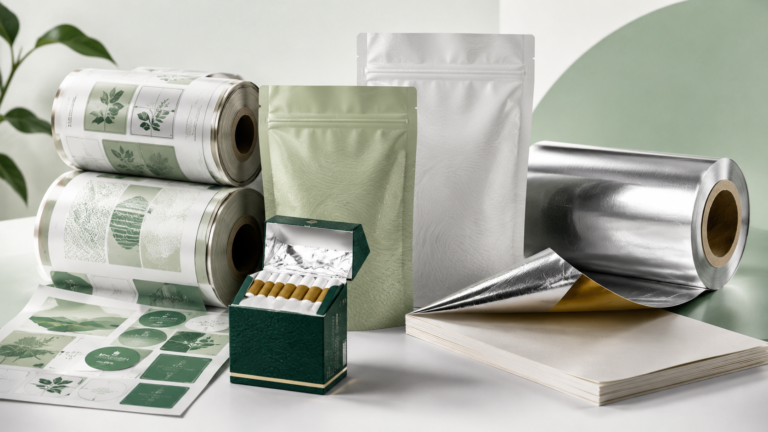









أغلفة السجائر الداخلية القابلة لإعادة الإغلاق الجمع بين الحماية الحاجزة مع فتحة تحكم قابلة للفتح والإغلاق المتكرر. على عكس البطانة الداخلية التقليدية التي تُزال مرة واحدة، يتيح التصميم القابل لإعادة الإغلاق للمستهلك فتح العلبة، إخراج سيجارة، وإغلاق البطانة مرة أخرى.
يعتمد الأداء الموثوق على النظام الكامل: بنية التصفيح، حاجز الرطوبة والرائحة، هندسة الفتح، نمط اللاصق، نافذة الختم، تسجيل الطباعة، القص الدقيق، والتوافق مع خط التعبئة. يوضح هذا الدليل المعلومات التقنية التي يجب على المشترين وأصحاب العلامات التجارية وموردي المعدات والمحولين التأكد منها قبل أخذ العينات أو الإنتاج.
ما هو الغلاف الداخلي للسجائر القابل لإعادة الإغلاق؟
تحيط البطانة الداخلية بحزمة السجائر داخل الكرتونة. في التصميم القابل لإعادة الإغلاق، تحتوي المنطقة العلوية على غطاء قابل للتقشير أو ملصق أو فتحة مدمجة تُضغط مرة أخرى إلى موضعها بعد كل استخدام. يجب أن يوفر نظام الفتح قوة تقشير متوقعة، وتجنب تمزق المادة الأساسية، والاستمرار في الإغلاق بعد دورات متكررة.
قد يتم توريد المادة كلفة مطبوعة للتحويل المباشر، أو كشبكة مقطوعة مسبقًا، أو كتركيبة نهائية مُجهزة لنظام تعبئة محدد. يعتمد الشكل الصحيح على تصميم علبة السجائر وطراز الماكينة ومكان إنشاء ميزة الفتح.
البطانات الداخلية التقليدية مقابل القابلة لإعادة الإغلاق
| نقطة التصميم | البطانة الداخلية التقليدية | البطانة الداخلية القابلة لإعادة الإغلاق |
|---|---|---|
| الفتح | تمزيق أو فتح لمرة واحدة | غطاء أو ملصق متحكم به مصمم للوصول المتكرر |
| نظام اللاصق | عادةً ما يكون موجهًا للختم أو تجميع العبوة | يتطلب نمط لاصق قابل لإعادة الإغلاق محدد ومناطق غير لاصقة |
| القص الدقيق | قص قياسي أو هندسة تمزيق | محيط الفتح الدقيق واللسان وعمق القص أمور بالغة الأهمية |
| استخدام المستهلك | الحاجز يُفتح بشكل دائم بعد أول استخدام | يمكن ضغط الفتحة لإغلاقها بين الاستخدامات |
| متطلبات الماكينة | متوافق مع معالجة البطانات المعتادة | قد يتطلب تحكمًا إضافيًا في التسجيل أو القص الدقيق أو وضع الملصقات |
بنية المادة ووظائف الطبقات
لا يوجد تصفيح عالمي لكل علبة سجائر. يمكن أن يجمع التركيب بين الورق، BOPP، PET، رقائق الألومنيوم، الفيلم المعدني، طلاء الختم الحراري، ولاصق قابل لإعادة الإغلاق متحكم به. لكل طبقة وظيفة منفصلة.
| المكوّن | الوظيفة النموذجية | أسئلة المواصفات |
|---|---|---|
| دعامة الورق أو البوليمر | الصلابة، وضوح الطي، سطح الطباعة، ومعالجة اللفة | الوزن الأساسي أو السماكة، الصلابة، الالتواء، والاستجابة الحرارية |
| رقائق الألومنيوم | إمكانية حاجز عالية للرطوبة والأكسجين والضوء والرائحة | سماكة الرقاقة، التحكم في الثقوب الدقيقة، مقاومة الانثناء، والالتصاق |
| الفيلم المعدني | حاجز ومظهر معدني مع محتوى رقاقة أقل | هدف الحاجز، التصاق المعدن، وأداء الانثناء |
| المادة الختمية أو الطلاء | الختم الحراري، الحماية من الخدش، أو التوافق مع تجميع العبوة | درجة حرارة الختم، زمن التلامس، وزن الطلاء، ونافذة الختم |
| اللاصق القابل لإعادة الإغلاق | تقشير وإغلاق متكرر | نمط الطلاء، نطاق التقشير، هدف الدورة، الرائحة، والبقايا |
| طبقة الطباعة والحماية | الرسومات التجارية، علامات التسجيل، ومتانة السطح | نظام الحبر، هدف اللون، مقاومة الاحتكاك، والطلاء العلوي |
يمكن النظر في تصفيحات فيلم/رقاقة/فيلم مثل BOPP/ألومنيوم/BOPP لتطبيقات مختارة، بينما قد تناسب تركيبات ورق/رقاقة أو PET/رقاقة خطوطًا أخرى. يجب التحقق من درجات الفيلم الفعلية والسماكات والطلاءات والمواد الختمية مع الماكينة والعبوة النهائية.
أداء الحاجز وحماية النضارة
تدير تغليف السجائر تبادل الرطوبة، والاحتفاظ بالرائحة، والتعرض البيئي خلال التخزين والتوزيع واستخدام المستهلك. توفر رقائق الألومنيوم إمكانية حاجز قوية، بينما يمكن تقييم الأفلام المعدنية والتصفيحات المطلية عندما تختلف متطلبات المرونة أو الوزن أو المظهر أو المعالجة.
لا تصف القيم المخبرية للتصفيح المسطح العبوة الكاملة. يمكن أن تغير الطيات والأختام والفتحات المقطوعة ومناطق اللاصق والفتح المتكرر الأداء الفعلي. عندما يكون الحاجز بالغ الأهمية، حدد طرق اختبار موضوعية وشروطًا لانتقال بخار الماء والأكسجين، ثم تحقق من الأداء على العبوات النهائية.
إدارة الرطوبة
يجب أن تقلل العبوة من اكتساب أو فقدان الرطوبة غير المرغوب فيه دون خلق مشاكل في التحويل. يعتمد الأداء المطلوب على مزيج التبغ، ومناخ التوزيع، ومدة التخزين، وتصميم الكرتونة الحالي. يجب أن تحدد المواصفات الهدف بدلاً من طلب “حاجز عالي” فقط.”
الاحتفاظ بالرائحة والتحكم في الروائح
The laminate, ink, coating and adhesive should be evaluated for odor and possible interaction with the packed product. Production materials and curing conditions must match the approved sample. A technically strong adhesive is not suitable if it creates unacceptable odor or transfer.
التقشير، وإعادة الإغلاق، وهندسة الفتح
A successful opening system balances initial peel force, repeated tack and package integrity. Excessive force can tear the flap or deform the pack. Insufficient force can allow premature opening or weak reclosure.
- Opening size, position and orientation
- Peel direction and starting tab geometry
- Adhesive coating pattern and coat weight
- Non-tack or dead zones around the tab
- Die-cut contour, bridge points and cutting depth
- Seal-window clearance from ink and decorative coatings
- Expected number of opening and closing cycles
- Behavior after temperature and humidity conditioning
Prototype testing should use the actual pack dimensions, cigarette bundle and packing sequence. A flat hand sample cannot reveal all folding, compression and machine-handling effects.
Resealable Adhesive Requirements
The adhesive must bond securely to the intended surface while allowing controlled reopening. Its performance can change with coating weight, substrate treatment, temperature, contamination and dwell time.
Evaluation should include initial peel, repeated reseal cycles, residue, edge lift, blocking in the roll, adhesive transfer and odor. The adhesive supplier’s regulatory and product-contact documentation should be reviewed for the intended market and construction.
Printing, varnish, release coating or embossing inside the adhesive zone can change peel behavior. Functional areas should be clearly separated in the artwork and converting drawing.
الطباعة، والنقش، والتشطيبات السطحية
Inner liners can include one-color or multicolor printing, Pantone colors, brand elements, registration marks, tracking features and technical identification. Depending on the structure, finishes may include matte or gloss effects, metallic appearance, embossing or debossing.
Artwork should show all functional zones: folds, seals, opening contour, non-adhesive tab, eye marks and cut positions. White ink or opaque layers may be needed on clear or metallic film. Very heavy ink or coating coverage near a fold or seal should be reviewed before approval.
For related constructions, see our خيارات تغليف السجائر بورق الألمنيوم.
Die Cutting and Registration Control
The opening cut must pass through the intended layer without damaging the liner structure, release surface or carrier. Inconsistent cutting depth can create difficult opening, premature tearing or web breaks. Registration must remain stable between print, adhesive, seal window and die-cut contour.
- Printed eye-mark dimensions and contrast
- Machine direction and cross-web registration tolerance
- Cutting depth and blade condition
- Opening pitch and repeat length
- Tab edge cleanliness and bridge-point control
- Inspection frequency and signed limit samples
التوافق مع معدات التعبئة
Roll width, pitch, unwind direction, core diameter, maximum roll outside diameter, splice method and registration marks must match the line. Web tension, curl, stiffness and friction influence feeding stability at production speed.
If the project replaces a conventional liner, the line may need a registered die-cut station, label application system or different folding controls. Early coordination among the brand, packaging converter and equipment supplier reduces commissioning risk.
Recommended Trial Process
- Drawing review: confirm pack dimensions, opening geometry, web direction, pitch and functional zones.
- Material sample: evaluate appearance, stiffness, odor and basic sealing behavior.
- Converted prototype: test peel force, reseal cycles, die-cut quality and printed registration.
- Machine trial: run the material at increasing speed and record tension, misfeeds, wrinkles and registration.
- Conditioned-pack test: evaluate finished packs after relevant temperature, humidity and storage exposure.
- Approval sample: sign and retain a reference with the final technical specification.
Changes to film grade, adhesive, coating, ink or curing process after approval should be reviewed before repeat production.
Quality Control Checklist
- Layer structure, thickness and basis weight
- Roll width, pitch, core and outside diameter
- Unwind direction and splice construction
- Print color, eye marks and registration accuracy
- Adhesive pattern, coat consistency and non-tack zones
- قوة الختم وموضع نافذة الختم
- قوة التقشير الأولية وأداء إعادة الإغلاق المتكرر
- Barrier results for the approved laminate
- Ink adhesion, rub resistance, odor and surface cleanliness
- Cutting depth, flap alignment and edge quality
- Machine-trial performance at planned production speed
Information to Include in an RFQ
- Finished cigarette pack size and inner-liner drawing
- Current material structure and thickness
- Target barrier and reseal requirements
- Machine manufacturer, model and operating speed
- Roll width, pitch, core, outside diameter and unwind direction
- Printing colors, eye marks, embossing and surface finish
- Opening contour, adhesive pattern and expected cycles
- Trial quantity, annual volume and number of designs
- Destination market and required material documentation
- Photos, samples and known problems with the current pack
الأسئلة الشائعة
Is aluminum foil required for every resealable liner?
No. Aluminum foil is a strong barrier option, but the final choice should follow the pack’s barrier target, machine requirements, flexibility and cost. Metallized or coated structures may suit selected applications after testing.
How many times should the liner reseal?
The required cycle count should reflect expected consumer use and should be agreed before adhesive selection. Test peel and reseal after relevant storage conditioning, not only immediately after production.
Can a resealable liner run on an existing packing machine?
Sometimes, but the answer depends on the machine and how the opening feature is formed. Additional registration, die cutting or label-application equipment may be required. Provide the machine model and technical drawing early.
What causes inconsistent opening force?
Common causes include adhesive coat variation, surface-treatment changes, ink or coating inside the functional zone, incorrect cutting depth, temperature, contamination and material aging.
ناقش مشروع البطانة القابلة للإغلاق
SZKAYU supplies custom printed inner-liner rollstock and related cigarette packaging materials. Review our حلول البطانة الداخلية للسجائر for additional structures and formats.
Send your drawing, current structure, machine model, roll specification, opening design and annual volume through our نموذج طلب عرض السعر. We can evaluate materials, printing, adhesive and trial requirements for your project.